
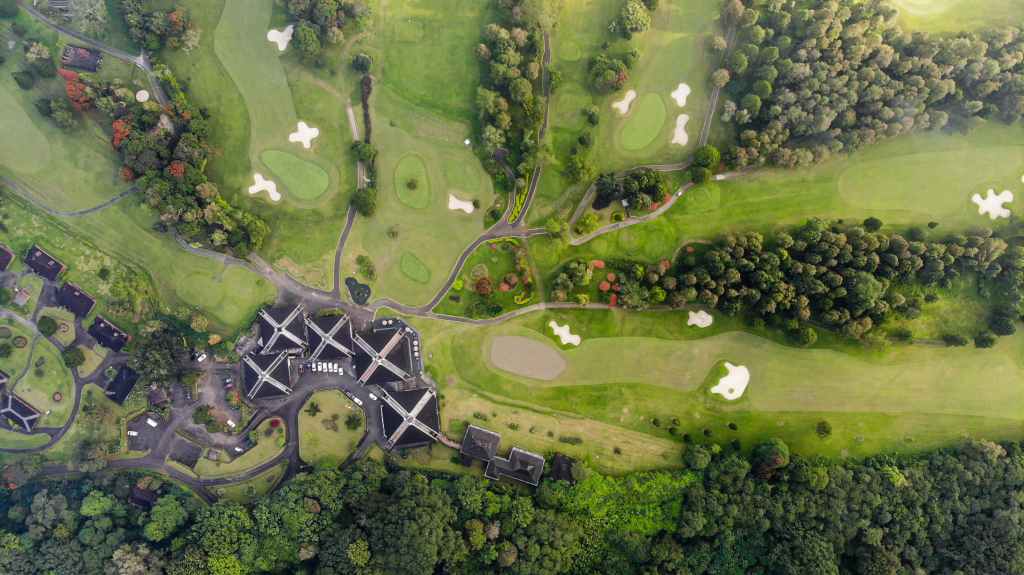
In the heart of the suburban community of Harmonyville, nestled between rolling hills and lush greenery, there stood a golf course known as the “Fairways of Unity.” This course was more than just a playground for golf enthusiasts; it was a testament to the belief that golf was a game for all, devoid of discrimination and prejudice.
Harmonyville was a diverse and close-knit community where people of different races, backgrounds, and beliefs lived harmoniously. The Fairways of Unity golf course was a reflection of this community spirit, with its mission to promote inclusivity, tolerance, and respect among its members.
The story of this unique golf course began with Sarah Mitchell, a passionate golfer who had moved to Harmonyville with her family. As an African American woman, she had faced her fair share of racial discrimination in the world of golf. She had a vision to create a golf course that would serve as a model of diversity, demonstrating that golf was indeed a game for all.
Sarah approached the local golfing association with her idea, and after numerous discussions, they embraced her vision wholeheartedly. They allocated a piece of land on the outskirts of Harmonyville to create the Fairways of Unity golf course, where the principles of fairness and inclusivity would be upheld.
The construction of the golf course was a true community effort. People from all walks of life came together to help build the course. Local volunteers, professional golf course architects, and local businesses donated their time and resources to make Sarah’s vision a reality. The clubhouses and practice greens soon took shape, with a mural on the entrance wall that depicted golfers of all ethnicities teeing off together.
Once the golf course was completed, the Fairways of Unity attracted golfers of all backgrounds. It was a place where friendships blossomed and old stereotypes crumbled. Players shared their passion for golf, inspiring one another to improve their game. Sarah’s dream was coming to life, and she saw the transformation happening before her eyes.
One sunny morning, Sarah was practicing her swing on the driving range when she noticed a young Hispanic boy, Carlos, watching her intently. With a warm smile, she invited him to join her, giving him some tips and encouragement. Carlos soon became a regular at the Fairways of Unity, and his love for the game grew.
Golf became a bridge between different generations at Harmonyville. Sarah’s young daughter, Emily, joined her mother on the fairways. She formed a special bond with Carlos and their friendship transcended racial and generational lines. Together, they practiced, learned, and competed on the golf course.
The Fairways of Unity became a symbol of hope, where unity and diversity were celebrated. People from all backgrounds felt a sense of belonging. The golf course’s ethos was about breaking down stereotypes and preconceptions, both on and off the course.
One day, Sarah met a man named Raj, who had recently moved to Harmonyville from India. He was drawn to the game of golf but had hesitated to join any local clubs due to his apprehension about feeling like an outsider. Sarah extended her welcoming hand, and Raj decided to give the Fairways of Unity a try.
Raj quickly realized that golf was a universal language, transcending barriers of language, culture, and race. He was paired with diverse groups of golfers, all of whom embraced him warmly. With time, he became a beloved member of the community, forming lifelong friendships and leaving behind his initial fears of exclusion.
As the Fairways of Unity flourished, its reputation as a model of inclusivity spread beyond Harmonyville. Golfers from other communities started to visit, and other golf courses began to adopt similar principles of diversity and respect. The local golfing association proudly supported these initiatives, creating a network of inclusive golf courses throughout the region.
One of the most remarkable moments in the history of Fairways of Unity was the annual Unity Cup tournament. It brought together golfers from various communities, transcending borders and barriers. The event was not just about competition; it was about unity and solidarity. It showcased that people from all walks of life could come together, share their passion for golf, and break down stereotypes.
The Fairways of Unity’s impact extended beyond the golf course itself. It inspired the people of Harmonyville to embrace inclusivity in their everyday lives. The community became a shining example of how people from diverse backgrounds could live harmoniously and learn from one another’s experiences.
Sarah Mitchell’s dream had become a reality, and she was proud of what she had accomplished. The Fairways of Unity stood as a testament to the idea that golf was a game for all and that discrimination and racism had no place in the world of sports.
The Fairways of Unity was not just a golf course; it was a symbol of hope and change. It taught people that, no matter their background, they could come together, enjoy the game of golf, and foster lifelong friendships. It showed the world that golf was a game for all and that unity and diversity were the keys to its future.
As the years passed, the Fairways of Unity continued to thrive, serving as a beacon of inclusivity and a reminder that diversity was not a weakness but a strength. Golfers of all backgrounds came together to swing their clubs, forge lifelong friendships, and stand as a testament to the power of unity.
In Harmonyville, the Fairways of Unity was not just a golf course; it was a living, breathing testament to the idea that golf, indeed, was a game for all, transcending racial, cultural, and societal divides. It served as a reminder that, when people come together with open hearts and minds, they can achieve remarkable things, both on and off the green.



 Socially Out Of Bounds
Leave a comment